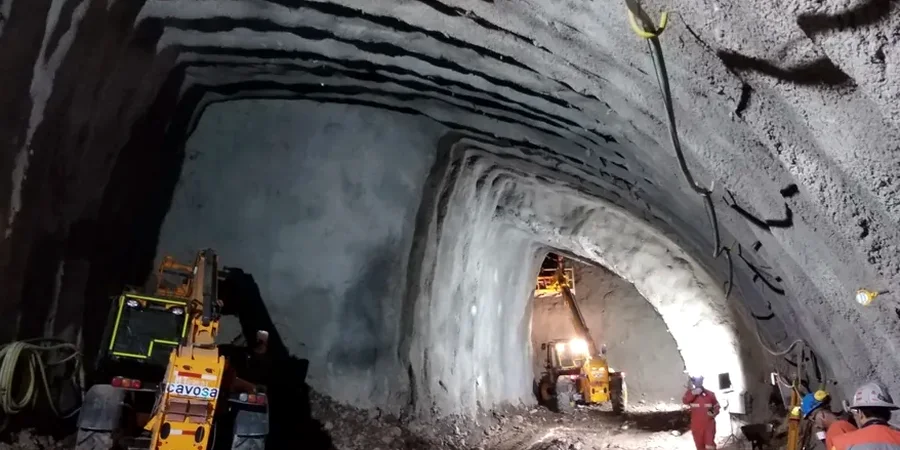
Underground excavations in Fort Worth represent a specialized branch of geotechnical engineering that encompasses the planning, design, construction, and monitoring of subterranean spaces. From utility tunnels and transit corridors to deep foundations and basement constructions, these projects demand a thorough understanding of local subsurface conditions. The category covers the full lifecycle of underground works, including site investigation, laboratory testing, numerical modeling, temporary support systems, and long-term performance assessment. In a rapidly growing metropolitan area like Fort Worth, where infrastructure must keep pace with urban expansion, the ability to safely and efficiently execute underground excavations is critical to maintaining essential services and enabling development.
Fort Worth's geology presents a unique set of challenges and opportunities for underground construction. The region is underlain by the Eagle Ford Shale and the Woodbine Sandstone, which are part of the Gulfian Series of Cretaceous age. These formations are often overlain by residual soils, alluvial deposits along the Trinity River, and expansive clay layers that are notorious for their shrink-swell behavior. The presence of these expansive clays, particularly in the near-surface zones, requires meticulous attention to moisture control and support sequencing during excavation. Deeper excavations frequently encounter weathered shale, where strength and stiffness can vary dramatically depending on the degree of weathering and the orientation of bedding planes. A detailed geotechnical analysis for soft soil tunnels is often the first step in characterizing these complex ground profiles.
Regulatory compliance in Fort Worth is governed by a combination of local, state, and federal standards. The City of Fort Worth's Building Code, which adopts the International Building Code (IBC) with local amendments, sets forth requirements for excavation safety, shoring, and foundation design. At the state level, the Texas Engineering Practice Act regulates the practice of engineering, requiring that all geotechnical reports and designs be prepared under the responsible charge of a licensed Professional Engineer. Federal regulations from the Occupational Safety and Health Administration (OSHA), specifically 29 CFR Part 1926 Subpart P, mandate strict protocols for trenching and excavation safety, including soil classification, protective systems, and competent person inspections. Adherence to these standards is non-negotiable for any underground project, and a robust geotechnical design of deep excavations integrates these requirements from the earliest stages of planning.
The types of projects that rely on this category are diverse and vital to the city's infrastructure. Major transportation initiatives, such as the expansion of underground transit systems or the construction of below-grade highway segments, demand advanced tunneling methods and continuous ground support. Utility providers frequently require deep excavations for the installation and repair of water, sewer, and stormwater conveyance systems, often in congested urban corridors. Commercial and institutional developments, including high-rise buildings with multi-level basements and underground parking structures, depend on precise excavation and shoring to manage lateral earth pressures and prevent ground movement. Throughout the construction phase, geotechnical excavation monitoring provides real-time data on deformation, pore water pressure, and structural loads, allowing engineers to verify design assumptions and implement contingency measures when necessary.
Quick answers
What are the primary geotechnical risks associated with underground excavations in Fort Worth?
The main risks stem from expansive clay soils that cause ground movement with moisture changes, and the unpredictable strength of weathered Eagle Ford Shale. Groundwater infiltration into excavations can destabilize slopes and shafts. Additionally, the presence of existing underground utilities and the potential for settlement-induced damage to adjacent structures require careful risk management throughout the project lifecycle.
How does OSHA Subpart P apply to underground excavation projects in Fort Worth?
OSHA 29 CFR Part 1926 Subpart P sets mandatory safety requirements for all excavations, including soil classification by a competent person, the design of protective systems like shoring or shielding, and daily inspections. In Fort Worth, these federal rules are enforced alongside local building codes, and they apply to trenches, shafts, and any underground opening where personnel are exposed to ground collapse hazards.
What is the typical process for designing support systems for a deep excavation in this region?
The process begins with a subsurface investigation to determine soil and rock properties. Engineers then use finite element or limit equilibrium analyses to model earth pressures and groundwater effects. Based on these results, a support system—such as soldier piles, secant walls, or soil nails—is designed to meet both strength and serviceability criteria, with all designs sealed by a Texas-licensed Professional Engineer.
Why is monitoring important during underground construction in urban areas like Fort Worth?
Monitoring provides real-time feedback on how the ground and support systems are behaving, which is crucial in urban settings where excavation-induced movements can damage nearby buildings, utilities, or roadways. Instruments like inclinometers, piezometers, and strain gauges allow engineers to detect unexpected deformations early and adjust construction methods or support designs to prevent failures.