Geotechnical laboratory testing forms the scientific backbone of every successful construction and infrastructure project in Fort Worth. This category encompasses a comprehensive suite of physical and mechanical analyses performed on soil and rock samples recovered from borings, test pits, and excavation sites. The primary objective is to move beyond visual classification and obtain quantifiable engineering parameters. These parameters govern critical design decisions related to foundation bearing capacity, settlement potential, slope stability, and the long-term durability of earthwork structures. In the expansive and variable terrain of North Texas, relying solely on field observations without rigorous laboratory validation introduces unacceptable risk. A robust laboratory program deciphers the complex interaction between native soils, water, and structural loads, ensuring that designs are both safe and economical.
The geology of Fort Worth presents a unique set of challenges that make laboratory testing indispensable. The city rests predominantly on the Eagle Ford Group and the overlying Woodbine Formation, geological units known for their highly plastic, overconsolidated clays and shales. These formations have weathered over millennia to produce fat clays with a high smectite content, making them prone to significant volume changes with moisture fluctuation. The laboratory is the only environment where this shrink-swell potential can be accurately quantified. Standard field logging might identify a 'stiff, gray clay,' but only a laboratory determination of Atterberg limits can define the Liquid Limit and Plasticity Index that predict just how much that clay will heave or shrink beneath a slab-on-grade foundation.
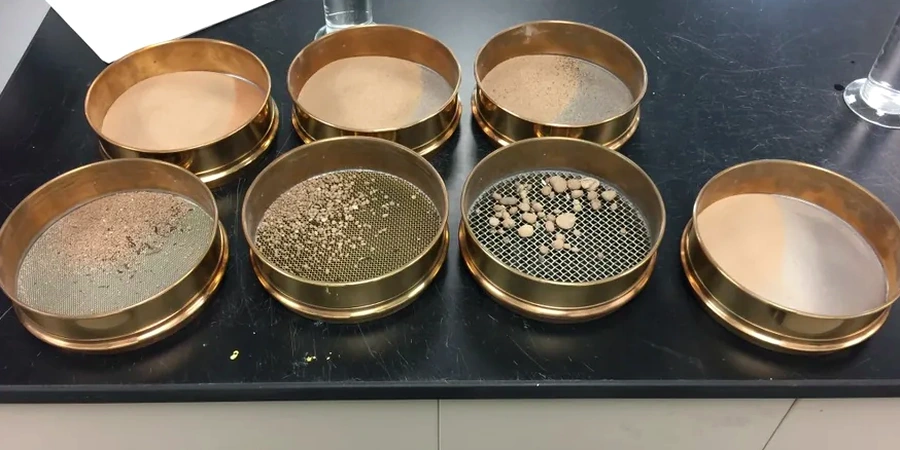
Precise particle size distribution is equally critical and is achieved through a combination of mechanical sieving and sedimentation methods. A thorough grain size analysis reveals the percentages of gravel, sand, silt, and clay-sized particles in a sample. This data directly informs drainage design, material suitability for select fill, and the potential for seepage under levees or dams. In the alluvial terraces along the Trinity River, you might encounter interbedded sands and silts. The laboratory’s ability to separate these fractions and determine the coefficient of uniformity is what allows an engineer to assess liquefaction potential or design an effective dewatering system, tasks impossible to achieve with accuracy in the field alone.
Compliance with national standards is non-negotiable for project approval in Fort Worth. All laboratory procedures are executed in strict accordance with ASTM International standards, which are universally adopted by the City of Fort Worth and the Texas Department of Transportation (TxDOT). Tests such as the one-dimensional consolidation curve (ASTM D2435) and the unconfined compressive strength of cohesive soils (ASTM D2166) are routinely specified in geotechnical reports. These standards ensure repeatability and legal defensibility of the data. Whether a project involves a high-rise tower in downtown, a residential subdivision on the city’s expanding fringe, or a critical public works facility, the laboratory report bearing these ASTM designations is a fundamental requirement for securing building permits and satisfying the scrutiny of peer review.
Quick answers
Why can't I just use field classification instead of sending soil samples to a laboratory in Fort Worth?
Field classifications are qualitative and rely on visual and manual assessments, which cannot measure engineering properties like shear strength, consolidation potential, or the precise plasticity index. Given Fort Worth’s expansive Eagle Ford shale clays, a field log cannot quantify the shrink-swell pressure that might crack a foundation. Laboratory testing provides the legally defensible, quantitative data required by ASTM standards for structural design and city permitting.
What laboratory tests are typically required for a residential foundation permit in Fort Worth?
A standard residential investigation typically requires a laboratory suite including moisture content, Atterberg limits to assess expansion potential, and unconfined compressive strength for bearing capacity analysis. A grain size analysis with hydrometer is also common to confirm the clay fraction. The specific tests are dictated by the geotechnical engineer based on the site's geology, but these are the baseline for designing an engineered slab or pier-and-beam system in the area.
How do ASTM standards impact the results I receive from a geotechnical laboratory?
ASTM standards provide a strict, internationally recognized methodology for sample preparation, test execution, and reporting. This ensures that a consolidation test performed in Fort Worth yields results directly comparable to one performed anywhere else in the country. Adherence to these standards is essential for the data's validity in a court of law and is a mandatory requirement in the specifications of the City of Fort Worth and TxDOT for public and private projects.
How long does it take to get results from a typical geotechnical laboratory testing program?
Turnaround time is highly dependent on the test type. Simple index tests like moisture content and Atterberg limits can often be completed within a few days. However, a consolidation test or a direct shear test requires time for staged loading and pore pressure dissipation, often taking one to two weeks or longer. The laboratory schedule is also a factor, so it is best to coordinate with the lab manager early in the project planning phase.