The Eastern Cross Timbers region presents a deceptive landscape for developers in Fort Worth. Surface limestone and sandstone outcrops often mask deep, saturated sand lenses deposited by the ancient Trinity River. These sands, particularly in the floodplains and alluvial terraces near the Clear Fork, are precisely the deposits that demand a thorough soil liquefaction analysis before any major structure is permitted. Our team has evaluated enough sites along the I-35W corridor to know that assuming bedrock stability without checking the deeper profile is a significant gamble. We combine Standard Penetration Test data with site-specific seismicity to determine if your site’s sands will turn to slurry during a seismic event, and we often integrate findings with CPT testing for continuous profiling in areas where the sand is too fine for reliable SPT recovery.
In Fort Worth's alluvial corridors, a standard bearing capacity check is not enough. If saturated sands are present below the water table, you must quantify the settlement and lateral spread potential under seismic load.
Technical details of the service in Fort Worth
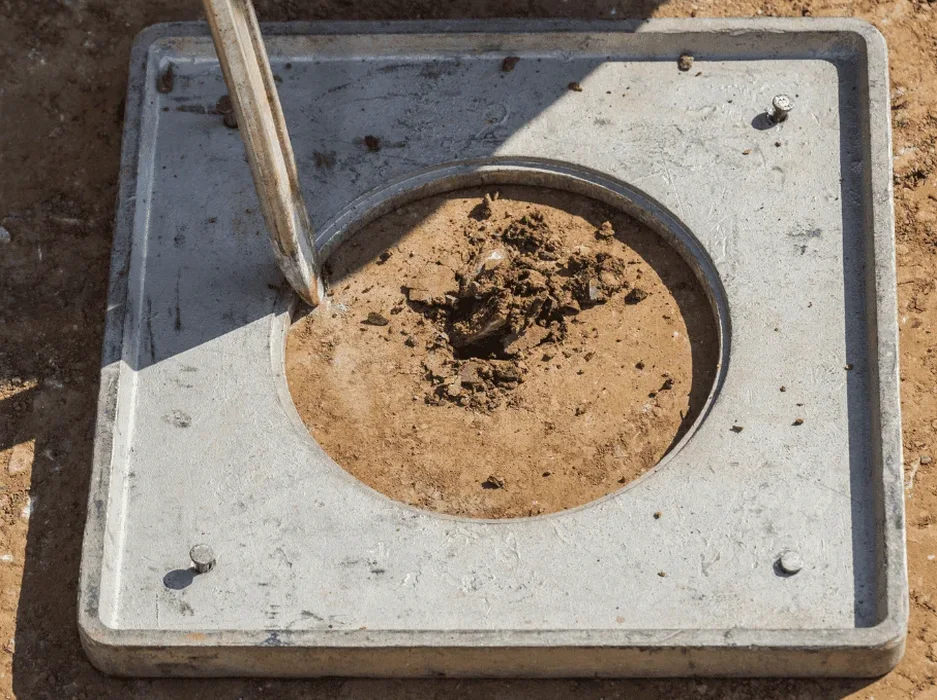
Risks and considerations in Fort Worth
Fort Worth’s rapid expansion north toward the Alliance corridor and east along the Trinity River has pushed development onto Holocene alluvium that was pastureland two decades ago. The biggest geotechnical surprise we encounter is not a total absence of rock, but the presence of loose, saturated sand seams at depths of 10 to 25 feet, right in the bearing zone of shallow foundations. During a design-level earthquake, these seams can liquefy, causing sudden loss of bearing capacity and differential settlement that can shear utility connections and tilt floor slabs. Ignoring this risk because Fort Worth is not on the San Andreas Fault is a costly error. Our analysis quantifies the residual strength of the liquefied soil using methods by Olson and Stark, allowing the structural engineer to decide between deep foundations or ground improvement. In many cases, pre-construction vibrocompaction or stone columns offer a reliable remediation path right here in the Fort Worth Basin.
Our services
Our liquefaction assessment in Fort Worth transcends a generic software output. It constitutes a comprehensive process tailored to the local stratigraphy, from the initial subsurface exploration to the final remediation design.
SPT-Based Liquefaction Triggering
We use field SPT data from your site to calculate Cyclic Stress Ratio and Cyclic Resistance Ratio, applying site-specific fines content corrections from laboratory testing to determine the Factor of Safety against triggering for each soil layer.
Post-Liquefaction Settlement Analysis
Using the procedure by Ishihara and Yoshimine, we estimate the volumetric strain and consequent ground settlement after pore pressure dissipation, providing critical data for foundation and floor slab tolerance design.
Lateral Spreading Hazard Assessment
For sites adjacent to the Clear Fork or with significant grade changes, we evaluate lateral spreading displacement potential using empirical models calibrated to the local seismicity and topographical conditions.
Ground Improvement Remediation Design
When the FoS is below the IBC threshold, we design ground improvement solutions including vibrocompaction, stone columns, or deep soil mixing to densify the problematic sand layers and mitigate the liquefaction hazard.
Quick answers
Is liquefaction really a concern in Fort Worth, given its distance from major plate boundaries?
Absolutely. While Fort Worth is not on a plate boundary, it is subject to intraplate seismicity from ancient fault zones like the Meers Fault in Oklahoma and the Balcones Fault system. A magnitude 5.5 to 6.0 event, though infrequent, can generate enough ground shaking to liquefy loose, saturated sands in the alluvial deposits along the Trinity River and its tributaries. The IBC requires this to be evaluated.
What soil types in Fort Worth are most susceptible to liquefaction?
In our experience, the Quaternary alluvium and terrace deposits near the Clear Fork and West Fork of the Trinity River are the primary concern. These are typically clean to silty fine sands (SP-SM) with low relative density, deposited in low-energy fluvial environments. The key indicator is a saturated, loose sand with an SPT N-value below 15, located within the upper 50 feet of the profile.
What is the typical cost range for a liquefaction analysis in the Fort Worth area?
What happens if my site is found to have a high liquefaction potential?
If the Factor of Safety against liquefaction is below the IBC threshold, we do not just stop the report. We provide specific ground improvement recommendations. Depending on the site access and depth of the loose layer, this often involves vibrocompaction to densify the sand, or the installation of stone columns to provide drainage and reinforcement. We then verify the improvement with post-treatment SPT or CPT testing.