Fort Worth sits on the Eagle Ford Shale, a formation notorious for swelling clays that can wreck a foundation slab in a single dry summer. Contractors across Tarrant County know the routine: you compact the pad, it rains, and the soil density drops overnight. The Proctor test is the only way to lock in a target moisture content that holds up under these swings. Our lab runs both Standard Proctor (ASTM D698) and Modified Proctor (ASTM D1557) daily for commercial pads in AllianceTexas and residential lots in the Walsh development. We deliver the compaction curve and optimum moisture data fast because we understand the inspection schedule waits for no one. For sites with deeper fill lifts, we often pair the Proctor with sand cone density testing to verify field compaction matches the lab standard without slowing down the earthwork crew.
In Fort Worth's Eagle Ford Shale, a Proctor test isn't a formality. It's the difference between a slab that stays flat and one that calls the foundation repair crew.
Technical details of the service in Fort Worth
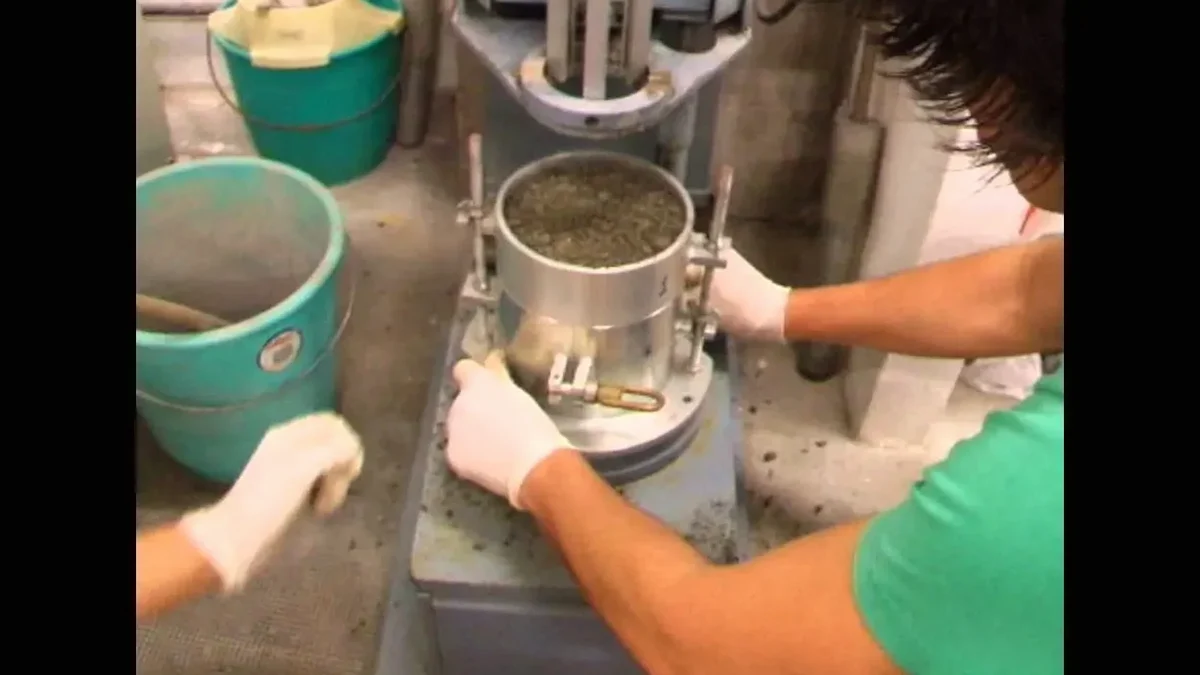
Risks and considerations in Fort Worth
One thing we see repeatedly in Fort Worth is a contractor running a Modified Proctor on a subgrade that the spec calls Standard, thinking a higher number looks better on the report. It doesn't. The inflated maximum dry density makes field compaction impossible to achieve, and the inspector will reject the lift. The other common failure mode is ignoring the moisture conditioning step. A sample that dries out on the drive from the job site to the lab produces a false peak on the curve, and the crew chases a density target the soil will never hit in the field. In the Eagle Ford, letting the sample sit overnight without sealing the bag can shift the optimum moisture by two full percentage points. Those two points translate to a failed nuclear gauge test and a day of lost production while the grader reworks the lift. The Atterberg limits test on the same material provides a sanity check: if the plastic limit and optimum moisture don't align within a reasonable band, the Proctor curve needs a second look before it goes to the field.
Our services
The Fort Worth laboratory performs the full compaction testing sequence without outsourcing any phase of the process.
Standard Proctor (ASTM D698)
The baseline for residential slabs, landscape berms, and utility trench backfill where compactive effort matches a light roller or walk-behind tamper. Includes full curve with 4 to 5 moisture points.
Modified Proctor (ASTM D1557)
Required for commercial building pads, TxDOT roadway subgrade, and any fill supporting heavy wheel loads. Simulates the energy of a 12-ton vibratory roller.
One-Point Proctor (Field Quick-Check)
A rapid verification method used when the full curve already exists for the borrow source. Confirms the material hasn't changed since the original lab test. Not a substitute for the full curve on initial submittal.
Quick answers
What's the difference between Standard and Modified Proctor?
The compactive effort. Standard Proctor uses a 5.5 lb hammer dropped 12 inches on 3 layers; Modified uses a 10 lb hammer dropped 18 inches on 5 layers. Modified simulates modern heavy compaction equipment and yields a higher maximum dry density at a lower optimum moisture content. Fort Worth commercial specs almost always require Modified.
How much does a Proctor test cost in Fort Worth?
What sample size do you need for the test?
We need about 40 pounds of representative soil for a Standard Proctor and 60 pounds for Modified. The sample must be sealed immediately after excavation. A five-gallon bucket with a tight lid works well. Dry, crumbled samples from an open truck bed will be rejected because the moisture has already shifted.
How quickly can I get the Proctor curve back?
Standard turnaround is 24 hours from sample drop-off. For Monday morning pours or inspection deadlines, we offer same-day service if the sample arrives before 9 AM. The report comes as a PDF with the full compaction curve, zero air voids line, and the optimum moisture and maximum dry density clearly tabulated for the field tech.