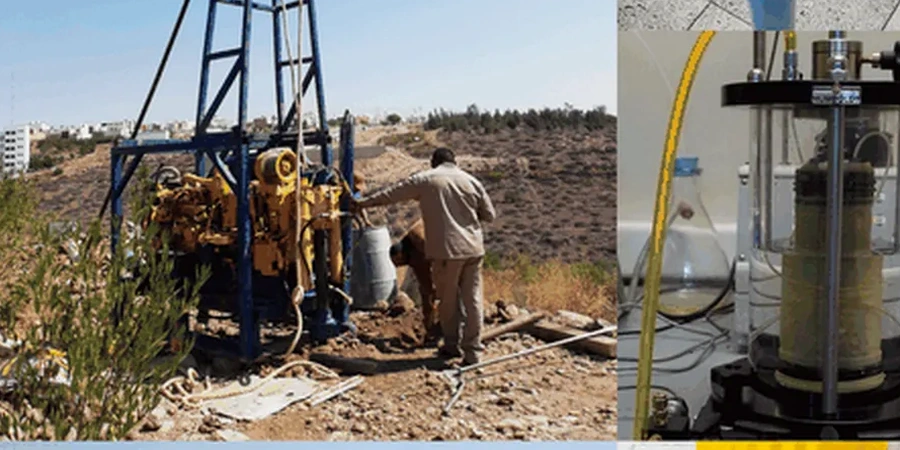
Geotechnical site investigation is the foundational phase of any construction or civil engineering project in Fort Worth, Texas. It encompasses a systematic program of subsurface exploration, sampling, laboratory testing, and engineering analysis designed to characterize soil, rock, and groundwater conditions at a proposed project site. In a city experiencing rapid commercial, industrial, and residential growth—from the urban core to expanding suburbs like Alliance and Walsh Ranch—understanding what lies beneath the ground surface is not merely a regulatory requirement but a critical risk management practice. A properly scoped investigation identifies potential geohazards such as expansive clays, shallow groundwater, or undocumented fill, enabling structural engineers and developers to design foundations, pavements, and earth retention systems that perform reliably over their intended service life while avoiding costly failures or construction delays.
The local geology of Fort Worth makes site investigation particularly crucial. The city sits near the boundary of two major physiographic provinces—the Grand Prairie and the Eastern Cross Timbers—underlain predominantly by Cretaceous-age sedimentary rocks of the Eagle Ford Shale, Woodbine Sandstone, and Austin Chalk formations. These bedrock units are typically mantled by residual soils and alluvial deposits that vary dramatically over short distances. The Eagle Ford Shale, in particular, weathers to form highly plastic, expansive clay soils that can swell when wet and shrink when dry, exerting significant pressure on foundations and causing differential movement. In the floodplains of the Trinity River and its tributaries like the Clear Fork and West Fork, thick sequences of soft, compressible alluvial clays and loose sands present challenges for bearing capacity and settlement. A thorough CPT (Cone Penetration Test) program can efficiently map these soft zones and provide continuous stratigraphic profiles, while Proctor tests on compacted fill materials ensure engineered backfill meets density and moisture specifications for stable support.
Regulatory compliance in Fort Worth is governed by the 2021 International Building Code (IBC) as adopted and amended by the City of Fort Worth, which mandates geotechnical investigations for all new buildings and significant additions. Chapter 18 of the IBC requires a soil report prepared by a licensed professional engineer that addresses bearing capacity, lateral earth pressures, expansive soil classification, and groundwater conditions. The Texas Board of Professional Engineers and Land Surveyors (TBPELS) regulates the practice, and all geotechnical reports must be stamped by a Texas-licensed Professional Engineer. For projects within the Trinity River floodplain or other flood hazard areas, the City’s Floodplain Management Ordinance requires additional analysis of scour potential and buoyancy. Transportation projects under the jurisdiction of TxDOT or the North Central Texas Council of Governments may follow TxDOT’s Geotechnical Manual, which specifies minimum boring depths, sampling intervals, and laboratory testing protocols tailored to the region’s geology.
The types of projects that demand comprehensive investigation in Fort Worth are diverse. High-rise commercial developments in downtown Fort Worth and the Cultural District typically require deep borings to evaluate bedrock competency for deep foundations such as drilled piers or auger cast piles. Large-scale distribution centers and industrial facilities in the AllianceTexas corridor need extensive CPT soundings to assess liquefaction potential and provide parameters for ground improvement design. Municipal infrastructure—including water and wastewater lines, retaining walls, and bridge foundations—relies on investigation data to select appropriate trench backfill and compaction specifications verified through Proctor testing. Even single-family residential foundations in areas known for expansive soils, such as those underlain by the Eagle Ford Shale, benefit from site-specific investigations that inform foundation type selection, whether slab-on-grade with moisture conditioning or post-tensioned designs.
Available services
Quick answers
What is the purpose of a geotechnical site investigation in Fort Worth?
A geotechnical site investigation characterizes subsurface soil, rock, and groundwater conditions to provide engineering recommendations for foundation design, earthwork, and construction. In Fort Worth, it identifies hazards like expansive clays from the Eagle Ford Shale or soft alluvial soils in river floodplains, ensuring structures are safe, code-compliant, and durable against local geological challenges.
When is a geotechnical investigation required by the City of Fort Worth?
The City of Fort Worth, under the adopted 2021 International Building Code, requires a geotechnical investigation for all new buildings and substantial additions. A stamped report from a Texas-licensed Professional Engineer must address bearing capacity, expansive soil classification, lateral earth pressures, and groundwater, with additional floodplain studies if the site lies in a designated flood hazard area.
How do local soil conditions affect foundation design in Fort Worth?
Fort Worth’s expansive clays, derived from weathered Eagle Ford Shale, can swell and shrink with moisture changes, causing differential foundation movement. In Trinity River floodplains, soft alluvial clays may lead to excessive settlement. Investigations quantify these behaviors so engineers can specify reinforced slabs, post-tensioned foundations, or deep piers to mitigate risk.
What is the difference between a geotechnical investigation and environmental site assessment?
A geotechnical investigation focuses on the physical and engineering properties of soil, rock, and groundwater for structural design purposes, such as bearing capacity and settlement. An environmental site assessment evaluates contamination from hazardous substances or pollutants. While distinct, both may be required for a development project in Fort Worth depending on site history and regulatory triggers.