In Fort Worth, the integrity of natural and engineered earth structures is not merely a design consideration—it is fundamental to public safety, asset protection, and regulatory compliance. The Slopes & Walls category encompasses the full spectrum of geotechnical services required to analyze, design, and stabilize soil retention systems and inclined ground surfaces. This includes everything from mechanically stabilized earth (MSE) walls and soldier pile systems to natural slope reinforcement and landslide mitigation. Given the region’s expansive clay soils and variable stratigraphy, these services are critical for preventing costly failures, maintaining right-of-way integrity, and ensuring long-term performance of infrastructure.
Fort Worth sits atop the Eagle Ford Group and Woodbine Formation, where weathered, high-plasticity clays and interbedded limestone layers create complex subsurface conditions. These soils are notorious for their shrink-swell behavior, which exerts significant lateral pressures on retaining structures and reduces the factor of safety in cut slopes. Seasonal moisture fluctuations and rapid urbanization further exacerbate instability, making rigorous in-situ permeability testing essential for understanding drainage patterns and pore pressure development behind walls. Without proper characterization, even well-constructed walls can experience rotational failures or excessive deflection over time.
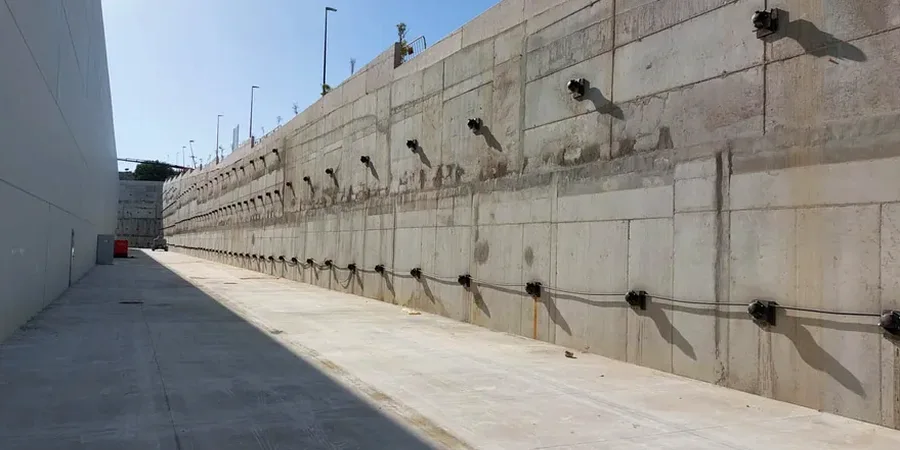
Design and construction in Fort Worth must adhere to the latest editions of the International Building Code (IBC) as adopted by the City, along with Texas-specific amendments. Retaining walls over four feet in height typically require engineered plans sealed by a licensed professional engineer. The Texas Board of Professional Engineers and Land Surveyors governs practice standards, while the Texas Department of Transportation (TxDOT) provides additional guidelines for walls adjacent to public rights-of-way. Geotechnical investigations must comply with ASTM standards for soil classification and strength testing, and slope stability analyses often reference FHWA and AASHTO methodologies for global and compound failure modes.
Projects requiring expertise in slopes and walls range from residential lot grading and commercial site development to major transportation corridors and flood control levees. Deep excavations for underground parking structures in downtown Fort Worth demand robust shoring designs, while suburban developments on the city’s periphery frequently encounter natural slopes that must be stabilized against erosion and surficial sliding. Critical infrastructure such as bridge abutments and sound barrier walls rely on advanced active/passive anchor design to resist lateral loads and maintain structural geometry under seismic and service conditions. Each project type presents unique challenges in terms of loading, geometry, and performance criteria, requiring tailored solutions rather than prescriptive approaches.
Quick answers
What is the difference between an active and passive anchor system for retaining walls?
Active anchors are tensioned after installation to apply a pre-compressive load to the soil mass, reducing immediate deflections. Passive anchors develop resistance only when the wall moves and mobilizes soil friction. The choice depends on allowable deformation criteria, soil conditions, and project constraints, with active systems often preferred in urban settings or near sensitive structures.
When is a slope stability analysis required in Fort Worth?
A slope stability analysis is typically mandated for any cut or fill slope exceeding 15 feet in height, slopes adjacent to structures or public rights-of-way, and sites with known expansive soils or seepage issues. Local building officials may also require it for slopes steeper than 3:1 or where previous failures have occurred within the geologic formation.
What are the common causes of retaining wall failure in North Texas?
Inadequate drainage behind the wall is the leading cause, leading to hydrostatic pressure buildup and soil saturation. Other factors include underestimation of expansive clay pressures, poor compaction of backfill, insufficient embedment depth, and lack of reinforcement in MSE walls. Proper weep holes, drainage blankets, and soil testing mitigate these risks.
How do local building codes govern retaining wall design in Fort Worth?
The City of Fort Worth adopts the International Building Code with local amendments. Walls over four feet require engineered plans and a building permit. Geotechnical reports must accompany permit applications for walls exceeding six feet or supporting surcharge loads. Seismic design follows ASCE 7 criteria for Seismic Design Category A or B, depending on site class.