Fort Worth sits on a geological seesaw: the Cretaceous-age Eagle Ford Shale and Woodbine Sandstone dominate the subsurface, weathered to stiff, highly plastic clays that swell with winter rain and shrink during the 100°F summer droughts. Seasonal moisture swings routinely exceed 15 percent volumetric change in the upper 8 feet, which makes shallow foundation design less about bearing failure and more about differential heave control. Our team runs Atterberg limits on every project, paired with suction profiles from filter paper tests, to define the active zone depth before selecting a footing type. For sites east of I-35W, where the shale is deeper, we often couple a stone column treatment with a stiffened slab to bridge soft spots without deep excavation.
In Fort Worth, the question is rarely 'will the soil hold the load' — it is 'how much will the slab curl during a drought year.'
Technical details of the service in Fort Worth
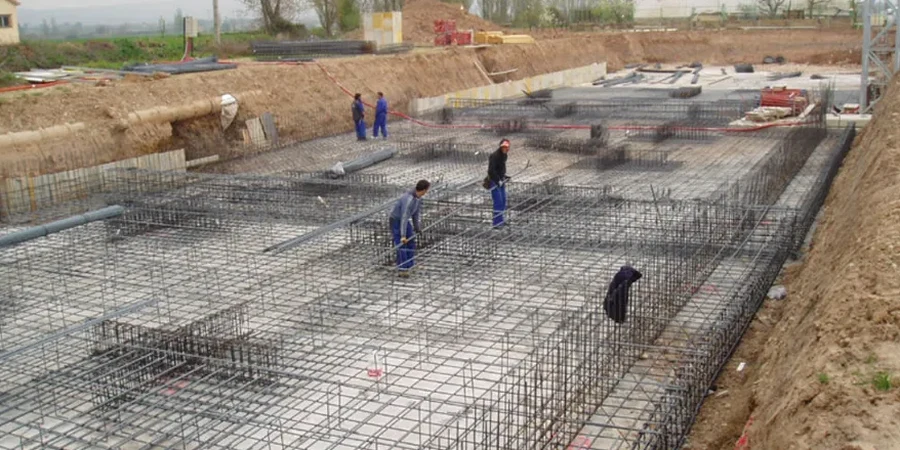
Risks and considerations in Fort Worth
Fort Worth's post-war expansion pushed residential subdivisions onto prairie uplands where 3 feet of moderately expansive topsoil overlies a 20-foot blanket of high-plasticity shale. Many 1960s-era slabs-on-grade, built without moisture barriers or perimeter drainage, have now cycled through six decades of wet-dry seasons. The cumulative damage pattern is predictable: perimeter grade beams tilt outward, interior partitions crack at door headers, and plumbing trenches become preferential moisture paths that concentrate heave under bathrooms and kitchens. A shallow foundation design today must account for existing fill and utility trenches that disrupt the natural moisture equilibrium. We specify under-slab vapor barriers, 10-foot foundation drains, and a maintenance covenant for gutter downspouts — because in this climate, a disconnected downspout 3 feet from the corner of the house can generate enough localized heave to lift a 20-ton slab.
Our services
Our shallow foundation practice covers the full design-to-construction sequence, starting with site-specific soil characterization and ending with a stamped report that the City of Fort Worth accepts on the first submittal. Every design package includes the PTI slab output file, boring logs with moisture profiles, and a construction-phase inspection checklist.
Stiffened Slab-on-Grade Design (PTI Method)
Full PTI DC10.5-19 compliant design with center lift, edge lift, and combined moment analysis. We provide rib dimensions, reinforcement schedules, and predicted differential movement for the 40-year design life. Suitable for single-family, multifamily, and light commercial on expansive clay.
Spread Footing and Mat Foundation Design
Bearing capacity and settlement analysis for isolated and continuous footings on Eagle Ford Shale or Woodbine Sandstone. We use triaxial strength data and consolidation test results to size footings that limit total settlement to 1 inch and differential to 0.5 inch per IBC Table 1604.5.
Moisture Control and Subgrade Preparation Plans
Site-specific moisture conditioning specifications, including under-slab vapor barriers, perimeter French drains, and post-construction landscape watering guidelines. We design the subgrade treatment to maintain moisture equilibrium within the active zone and reduce long-term heave potential.
Quick answers
What does a shallow foundation design package cost for a typical Fort Worth residential lot?
For a single-family residential lot under 0.5 acres, a complete design package — including soil borings, laboratory swell testing, PTI slab analysis, and a sealed geotechnical report — typically runs between US$1.700 and US$2.730. The final cost depends on the number of borings required and whether we need to run a site-specific suction profile versus using regional correlations.
Why does Fort Worth require a PTI design for post-tensioned slabs on expansive soil?
The Fort Worth Building Code mandates a PTI DC10.5 compliant design because the Eagle Ford Shale formation underlying most of the city exhibits high swell potential with plasticity indices commonly above 30 percent. A PTI design calculates the required rib depth and reinforcement to resist both center lift (wetting under the slab center) and edge lift (drying at the perimeter) conditions, preventing the structural cracking that plagued older slabs built without this analysis.
How deep do you drill the soil borings for a shallow foundation investigation?
For standard shallow foundations, we drill to a minimum depth of 20 feet or twice the maximum footing width, whichever is deeper, per IBC requirements. In Fort Worth we also penetrate at least 5 feet into the unweathered Eagle Ford Shale to confirm the bearing stratum is competent and to measure the full active zone depth for the PTI analysis.