Fort Worth sits at roughly 653 feet above sea level, straddling the Cretaceous-age Eagle Ford Shale and the softer Quaternary alluvium of the Trinity River floodplain. That stratigraphic contrast creates a split personality in the subsurface. One lot has 15 ksf bearing rock at 12 feet. The next one has 40 feet of plastic clay. Shallow footings do not work across the board here. We design pile foundations that transfer structural loads past the variable active zone and into competent bearing strata. For high-plasticity clay profiles east of downtown, we often pair the foundation design with a CPT test to map the undrained shear strength continuously. When the project involves bridge abutments near the Clear Fork, a slope stability analysis confirms the global factor of safety before we finalize the pile cap elevation.
In Fort Worth's alluvial corridor, a pile that terminates 2 feet above the shale weathers like a shallow footing—just deeper. We never guess the refusal depth.
Technical details of the service in Fort Worth
Risks and considerations in Fort Worth
The swelling potential of the Eagle Ford weathered zone catches out-of-town engineers. Summer drying cracks open the clay. Fall rains close them. That shrink–swell cycle imposes downdrag on piles that weren't designed for it. We apply a minimum 200 psf negative skin friction in the active zone unless site-specific swell testing proves otherwise. Scour at the Clear Fork and West Fork crossings is another local hazard—FHWA HEC-18 scour depths drive pile tip elevations below the 100-year contraction scour line. A liquefaction screening is mandatory for any pile-supported structure in the Trinity River floodplain, where loose saturated sands exist in the upper 30 feet. We run the NCEER simplified procedure and adjust the pile axial capacity accordingly.
Our services
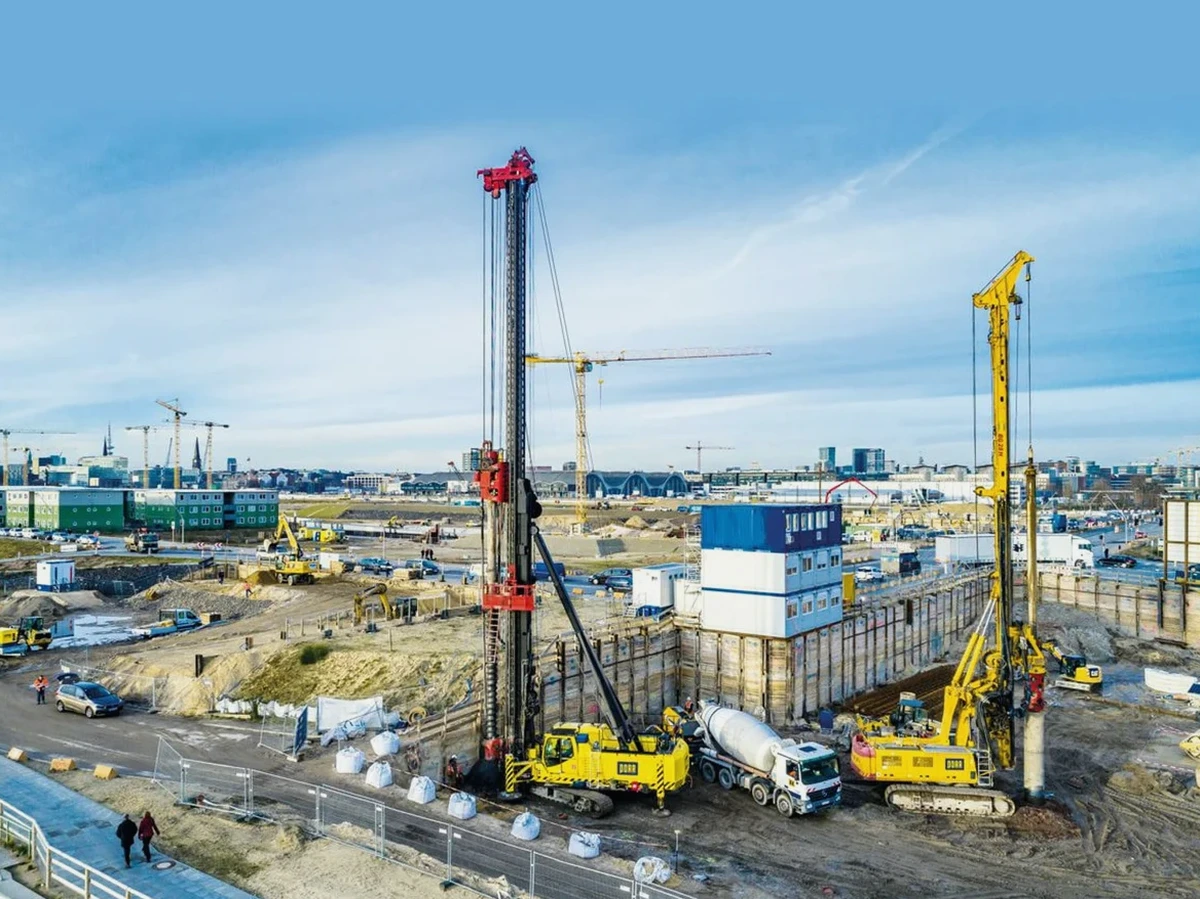
Our pile foundation design scope covers the full lifecycle: geotechnical investigation, axial and lateral capacity, settlement analysis, and construction-phase load testing. We work with driven H-piles, drilled shafts, and helical piles depending on access and soil conditions across Tarrant County.
Axial Capacity and Settlement Prediction
We run t-z and Q-z analyses calibrated to site-specific SPT N-values and lab consolidation data. IBC Chapter 18 and AASHTO LRFD methods drive the resistance factors.
Lateral Load and P-y Analysis
Using LPILE or GROUP, we model the upper 10–20 diameters where the Eagle Ford shale weathers to stiff clay. This governs pile size and reinforcing in high-wind or seismic applications.
Pile Load Test Program Design
We design the reaction frame, specify ASTM D1143 static load test procedures, and interpret the load–deflection curve. CAPWAP analysis confirms hammer performance and driving stresses where applicable.
Quick answers
What pile types work best in Fort Worth's Eagle Ford Shale?
Drilled shafts with temporary casing through the alluvium perform best because they can socket directly into the shale. Driven H-piles work on sites where the shale is shallow and the overburden is thin sandy clay, but pre-drilling is often required to avoid refusal on cobble-sized shale fragments. Helical piles suit lighter structures but struggle to penetrate the weathered shale without grout assistance.
How do you verify the pile design load before construction?
We specify a static load test program per ASTM D1143 or a high-strain dynamic test per ASTM D4945. The test pile is instrumented with strain gages at multiple depths to separate end bearing from skin friction. The results calibrate the resistance factor used in the production pile design.
What does a pile foundation design cost in Fort Worth?
Engineering fees for a pile foundation design package—including the geotechnical report, axial/lateral analysis, and load test specifications—typically range from US$1,550 to US$6,310 depending on the number of pile groups, the complexity of the soil profile, and whether dynamic testing supervision is included.
Do I need a pile foundation on a site with Eagle Ford Shale at 10 feet?
Not necessarily. If the weathered shale has an undrained shear strength above 2.5 ksf and the structural loads are moderate, a stiffened mat foundation may be sufficient. We run the settlement and bearing capacity numbers for both options—piles versus mat—and present the cost and schedule tradeoffs before you commit to a deep foundation.
How does the Trinity River floodplain affect pile design?
Three factors: scour depth, liquefaction potential, and buoyancy on the pile cap. We calculate the 100-year scour depth using HEC-18 methodology and lower the pile tip below that elevation. Loose sand layers are screened for liquefaction, and any loss of skin friction is deducted from the axial capacity. The pile cap is checked for flotation during the construction phase when the basement excavation may be open.