A six-story mixed-use project near Magnolia Avenue hit refusal on limestone float at 18 feet. The architect had designed for 35-foot drilled shafts, but the SPT blow counts told a different story. We mobilized within 48 hours, ran ASTM D1586-standard penetration tests at eight locations, and delivered the corrected N60 values that let the structural team cut foundation costs by 22 percent. Fort Worth sits on a geologic boundary where the Eagle Ford Shale meets Quaternary alluvium along the Trinity River, and standard penetration resistance can swing from N=8 to refusal in less than 30 yards. That kind of variability doesn't show up on a USGS map. It shows up in the split-spoon sampler. When we correlate SPT data with lab index testing and site-specific CPT soundings in the West 7th corridor, the subsurface picture sharpens enough to make confident decisions on bearing capacity and settlement.
SPT blow counts in Fort Worth can swing from N=8 to refusal in 30 yards—that variability doesn't appear on any map, only in the split-spoon sampler.
Technical details of the service in Fort Worth
Procedure video
Risks and considerations in Fort Worth
Fort Worth grew fast after the 1940s, and a lot of that expansion happened on cut-and-fill terrain near the Clear Fork and West Fork of the Trinity. Fill material from those decades—uncompacted urban debris, clay clods, construction rubble—shows up in SPT logs with erratic blow counts and zero stratigraphic consistency. One boring near Hulen Street hit N=4 in silty fill at 10 feet, refusal on shale at 14 feet, then N=12 in a weathered zone at 22 feet. That kind of profile is a textbook differential settlement risk if the structural engineer assumes uniform bearing across the footprint. SPT refusal on limestone floaters can mislead drillers into thinking they've hit bedrock when it's actually a detached block in a clay matrix, a condition we've documented repeatedly in the TCU-Westcliff area. Running SPT borings to 30 feet minimum—deeper in floodplain zones—is the only way to distinguish true refusal from floating obstacles.
Our services
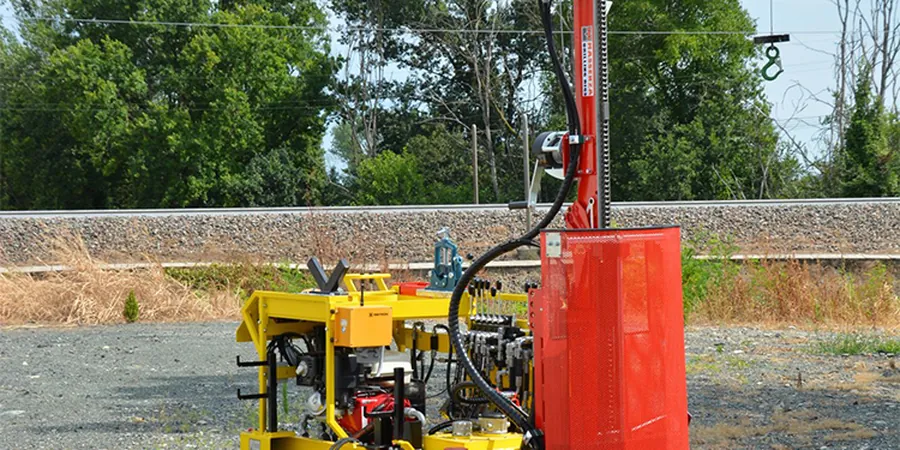
Our Fort Worth SPT operations cover everything from single-family pad sites to multi-acre commercial developments. Every boring run by a Texas-licensed driller with real-time logging and lab-ready sample handling.
SPT Borings for Foundation Design
Standard penetration testing at 5-foot intervals with split-spoon sampling, field logging per USCS, and lab coordination for index and strength testing. Data packages include corrected N60 profiles, soil descriptions, and bearing capacity recommendations calibrated to IBC presumptive values.
Combined SPT and Laboratory Package
SPT borings paired with moisture content, Atterberg limits, grain-size distribution, and unconfined compression on selected samples. We run the full ASTM suite so the geotechnical report includes friction angle, cohesion, and consolidation parameters—not just blow counts.
Deep Foundation SPT Verification
Pre-drilling SPT profiles for drilled shaft and driven pile design, including refusal-depth confirmation and rock socket length recommendations. We correlate N60 to shaft resistance using O'Neill and Reese (1999) methods for Texas shales.
Quick answers
How much does an SPT boring program cost in Fort Worth?
For a typical residential or light commercial project in Fort Worth, a two-boring SPT program with sampling at 5-foot intervals to 20-30 feet depth runs between US$500 and US$860 per boring, depending on access, traffic control requirements, and whether hollow-stem auger or mud-rotary drilling is needed. The total includes field logging, sample transport, and the corrected N60 data report. Lab testing and the geotechnical interpretation letter are quoted separately based on the number of samples selected for analysis.
How deep should SPT borings go for a slab-on-grade foundation in Fort Worth?
IBC 2021 Section 1803.5.2 requires borings to extend below all unsuitable bearing strata—and in Fort Worth, that means getting through the fill and alluvium to reach competent Eagle Ford shale or limestone. For a standard slab-on-grade, we recommend 20 feet minimum; in the Trinity River floodplain where alluvium can be thicker, 30 feet is more appropriate. If SPT blow counts stay below N=10 past 15 feet, we extend the boring until refusal or N≥50 for two consecutive intervals.
What's the difference between field N and corrected N60 in the SPT report?
Field N is the raw blow count from the split-spoon sampler. N60 is that same count normalized to a 60% hammer energy efficiency, plus corrections for rod length, borehole diameter, and overburden pressure. In Fort Worth clays and shales, the overburden correction can shift the interpreted friction angle by 2-3 degrees, which matters when you're sizing footings near the allowable bearing pressure limit. Every SPT log we deliver includes both values with the correction methodology cited so the structural engineer can trace the numbers.
Can SPT data tell me if I need piers instead of footings?
Yes, and that's exactly the kind of decision SPT data supports. If corrected N60 values in the bearing zone consistently exceed 30 and the material classifies as shale or dense sand, spread footings are usually viable. If N60 stays below 15 through the upper 25 feet—common in Trinity River alluvium—the settlement potential under structural loads often pushes the design toward drilled piers or ground improvement. We include a foundation-type recommendation matrix in every Fort Worth SPT report so the design team doesn't have to interpret raw blow counts alone.