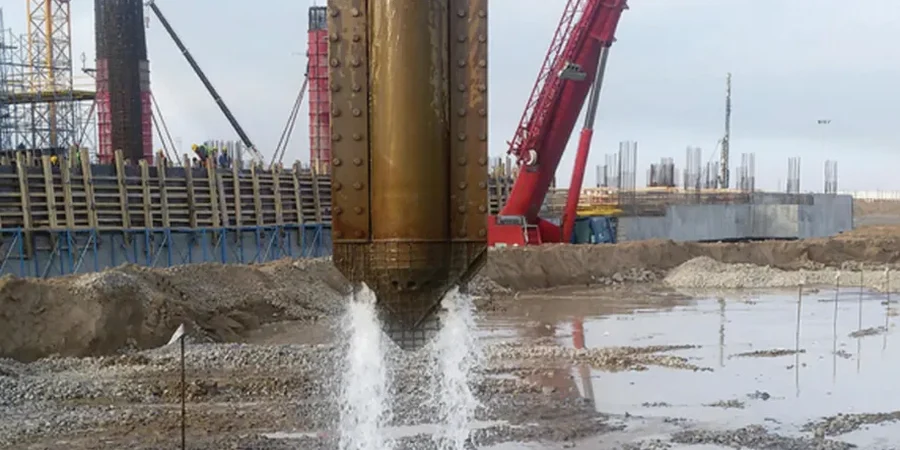
Fort Worth sits on the Woodbine Formation, but the real challenge lies in the younger Quaternary alluvium along the Trinity River and its tributaries. These loose, saturated sands can reach depths of 15 to 25 feet with SPT N-values below 10. A routine site investigation near Meacham Boulevard once revealed a 12-foot layer of clean sand that would densify under its own weight during a flood event. That is exactly the scenario where vibrocompaction design delivers results. We model the required vibrator power, probe spacing, and treatment depth based on ASTM D1586 data and the target relative density specified by the structural engineer. The analysis ties directly into the liquefaction assessment required under IBC Chapter 18 for Seismic Design Category D sites.
Vibrocompaction in Fort Worth's alluvial sands boosts SPT N-values from single digits to 24 or higher when the fines content stays below 15%.
Technical details of the service in Fort Worth
Risks and considerations in Fort Worth
The most common mistake on Fort Worth projects is specifying vibrocompaction without checking the fines content first. We have seen contractors attempt it in silty sand with 25% passing the No. 200 sieve. The result is a site that looks densified but still settles 2 inches under load because the silt prevented proper grain-to-grain contact. The second error is underpowered equipment. A V23 vibrator on a 10-foot grid cannot densify 20 feet of sand to 70% relative density. You need the right tool for the depth. The third risk is ignoring the vibration impact on adjacent utilities. A 100-year-old water main under Camp Bowie Boulevard will not survive a V48 running 10 feet away without a pre-condition survey and vibration monitoring plan. Our designs flag these risks during the desktop phase so the contractor never walks into a preventable failure.
Our services
Our vibrocompaction design package covers the full sequence from feasibility analysis to post-treatment verification. Each project receives a site-specific report with grid geometry, vibrator specifications, and acceptance criteria.
Feasibility and Design Analysis
We start with grain size distribution per ASTM D2487 to confirm the soil is suitable. The design then specifies vibrator type, spacing, treatment depth, hold times, and stage sequence. We model settlement reduction and post-treatment bearing capacity for the structural engineer's foundation design.
Post-Treatment Verification Testing
SPT borings at the centroid of each compaction grid cell confirm the achieved relative density. We compare pre- and post-treatment N-values at 5-foot intervals and issue a signed report certifying compliance with the project specification and IBC requirements.
Quick answers
What soil conditions in Fort Worth are ideal for vibrocompaction?
Clean sands and silty sands with fines content below 15% are ideal. Much of the Trinity River alluvium in Fort Worth falls into this category. We always run a full ASTM D2487 classification first. Soils with more than 20% fines or significant clay content need stone columns or other deep improvement methods instead.
How do you verify that the ground has been densified enough?
We drill SPT borings per ASTM D1586 at the centroid of each treatment cell. Pre-treatment N-values are compared with post-treatment N-values at the same depths. The acceptance criterion is typically a minimum relative density of 70% or a specified N-value threshold. We document every test and issue a signed verification report.
What does vibrocompaction design cost for a typical Fort Worth project?
Design fees generally range from US$1,660 to US$5,030 depending on the treatment area, depth, and number of verification borings required. A small commercial lot with a single grid zone falls at the lower end. A multi-acre industrial site with variable stratigraphy and phased treatment zones reaches the upper end.
How close to existing buildings can vibrocompaction be performed safely?
We set a peak particle velocity limit of 0.5 in/s at the nearest foundation, measured with a seismograph during a test run. The setback distance depends on the vibrator power and soil damping. In Fort Worth's dense urban areas, we often reduce the vibrator frequency or switch to a smaller probe for the perimeter rows to stay within safe limits.