Widening a stretch of Interstate 35W just south of downtown Fort Worth taught us a hard lesson about the local Eagle Ford Shale: what compacts beautifully in the lab can swell and rut within two seasons if the binder course isn't matched to the subgrade's real moisture sensitivity. Flexible pavement design here isn't just about traffic loads; it's about handling the shrink-swell rhythm of clay that sees 38°C August afternoons and sudden cloudbursts that overwhelm roadside drainage. Before the first truck of Type D HMAC arrives, we run a full suite of index and strength tests on the subgrade and base materials — grain-size distribution, Atterberg limits, modified Proctor, and California Bearing Ratio — so the structural number you submit to TxDOT's pavement design checklist is backed by numbers, not assumptions. For projects where the natural ground is too soft, we often combine the pavement analysis with a stone columns evaluation to stabilize the upper subgrade, and on longer commercial arterials we complement the CBR profile with in-situ permeability testing to design edge drains that actually keep the base dry.
A flexible pavement in Fort Worth lives or dies by its drainage coefficient — no amount of asphalt thickness compensates for a base course that stays saturated through the Texas summer.
Technical details of the service in Fort Worth
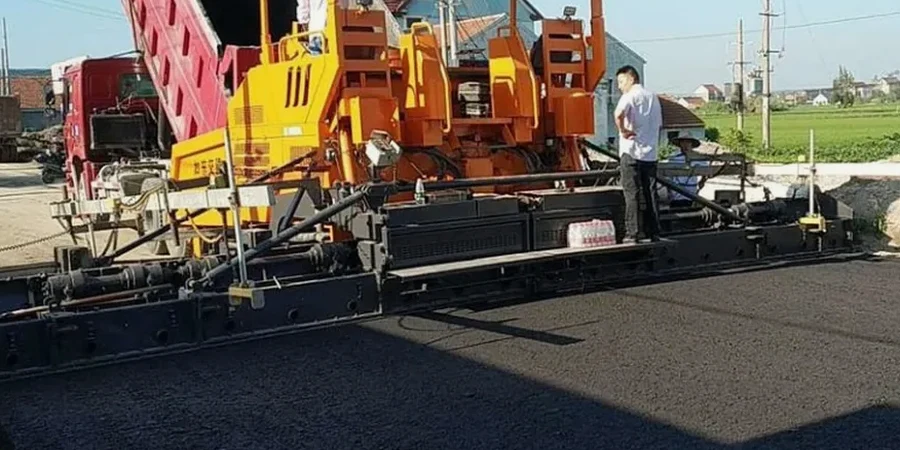
Risks and considerations in Fort Worth
Fort Worth sits at roughly 650 feet above sea level on a Cretaceous marine shale that weathers into a plastic, moderately expansive clay — the kind of soil that cost the City of Fort Worth over $2.5 million in unplanned pavement maintenance on a single arterial after the wet 2015–2016 cycle. When a flexible section is designed without accounting for swelling pressure, the asphalt mat develops longitudinal cracking within three to five years, and every crack becomes an infiltration point. Once water reaches the base, traffic pumping accelerates, and the structural number degrades far below the design assumption. The other quiet risk is thermal fatigue: repeated daily temperature swings from 70°F to 105°F during July and August demand a binder grade that resists rutting without becoming brittle in the occasional winter freeze. Our laboratory tests the Marshall or Superpave mix design against the actual subgrade support, and we never sign off on a section until the life-cycle analysis shows the design ESALs can be carried without exceeding the terminal serviceability index.
Our services
Our Fort Worth flexible pavement design work spans everything from a single-lane rural FM road overlay to a 50-acre distribution center parking lot. The two core service blocks below reflect the typical project flow — first characterizing the ground, then translating that data into a buildable, durable section.
Subgrade & Materials Investigation
We drill, sample, and test the upper 5 to 10 feet beneath the proposed grade line. This includes soil borings with SPT, thin-wall tube sampling in clay, bulk sampling of base aggregate sources, and a laboratory program covering grain size, Atterberg limits, sulfate content, Proctor density, and soaked CBR. We deliver a geotechnical pavement report with layer coefficients and a construction specification sheet ready for TxDOT or city submittal.
Pavement Structural Design & Life-Cycle Analysis
Using the 1993 AASHTO methodology calibrated for North Texas conditions, we compute the structural number required for your traffic forecast, select layer thicknesses, and verify the design against rutting and fatigue criteria. For high-volume corridors we run a Superpave mix analysis tied to the local climate data, and we provide a construction QA/QC checklist that covers compaction, tack coat, and joint density.
Quick answers
What's the typical cost range for a flexible pavement design package in Fort Worth?
For a standard commercial or light-industrial pavement project — including soil borings, laboratory testing, and the geotechnical pavement design report — budgets typically fall between US$1,680 and US$4,560, depending on the number of borings, the depth of investigation, and whether a Superpave mix design review is required.
How do you handle the expansive clay subgrades common in Fort Worth?
We focus on moisture control and layer separation. The design typically includes a lime-treated subgrade or a geogrid-reinforced base to interrupt the capillary rise from the underlying Eagle Ford Shale. We also specify edge drains with an outlet every 250 feet or at low points, so water never ponds in the base course. The soaked CBR test at the anticipated equilibrium moisture content drives the structural number, not the optimum-moisture CBR.
Can you design a flexible pavement that handles heavy truck traffic for a distribution center?
Yes — we start by converting your daily truck counts and axle configurations into 20-year design ESALs, then build the section from the subgrade up. For distribution centers with frequent channelized loading, we often specify a polymer-modified binder in the surface course and a thicker asphalt-concrete layer to push the critical strain deeper into the base. We also analyze the subgrade's resilient modulus at the stress state imposed by fully loaded trailers.
Do you provide compaction testing during construction in Fort Worth?
We do — our field team runs nuclear density gauge testing on each lift of subgrade, base, and asphalt, and we provide same-day reports with the percent compaction relative to the laboratory Proctor. For asphalt, we also check the in-place air voids using cores and compare them to the mix design target. This keeps the project moving without waiting on off-site lab results.